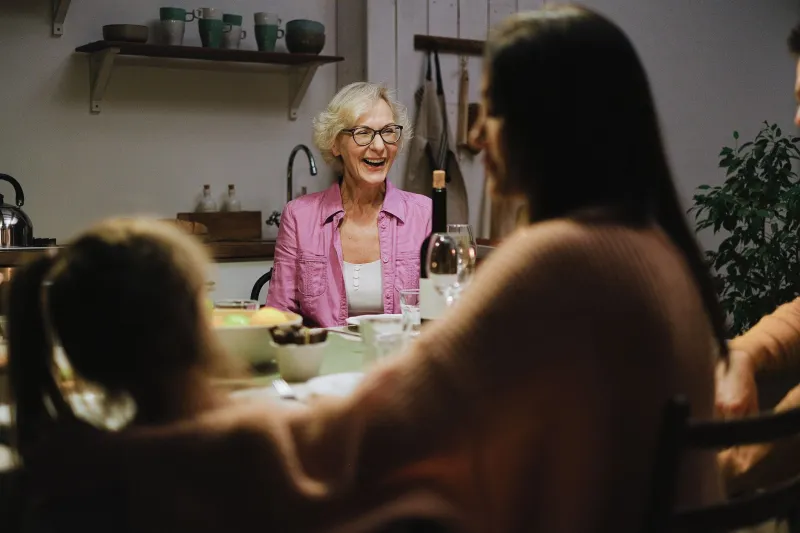
The Long Stretch Between Holidays: When 'I'm Bored' Isn't an Emergency
Photo: Naula Ayisabun Aningore, CC BY-SA 4.0, via Wikimedia Commons
There is a particular kind of quiet that shows up around the middle of holiday break. The school rhythm has stopped. The big moments are behind you. The house is full of new things and yet someone is flopped sideways on the couch announcing, ‘I’m bored.’
For a lot of caregivers, that sentence lands like an alarm. We start mentally scrolling through options: a craft, a movie, a trip to Target, a text to another parent, a screen. We want the discomfort to stop. And then, when the day still unravels by 3 p.m., we wonder why the break feels so hard.
Here is a gentler place to start: boredom is not a behavior problem. It is a threshold. And thresholds are uncomfortable before they become familiar.
Boredom Is a Threshold, Not a Verdict
Think about the first week of a new routine. The first day back at the gym, the first quiet Sunday after a busy season, the first hour of a long drive. There is a stretch where nothing feels right yet. Kids feel that same stretch when school pauses and the day opens up.
During the school year, so much of the day is decided for them. Bells, transitions, assignments, after-school plans. Holiday break removes the scaffolding, and the sudden space can feel less like freedom and more like static. A child who says ‘I’m bored’ may really be saying, ‘I don’t know how to start.’
That is not defiance. It is a skill gap. And skill gaps get better with practice, not punishment.
The Screen Isn’t the Villain—Default Is
Screens are part of family life. A holiday movie, a video call with cousins, a little extra tablet time while you cook—none of that is a crisis. The problem is when a screen becomes the automatic referee for every empty hour.
If every ‘I’m bored’ is met with a device, kids learn that boredom is an emergency that someone else must solve. They also learn that the fastest way to get a screen is to escalate. That is not a discipline failure. It is a pattern. Patterns can be changed gently.
Try predictable screen windows instead of an all-day open tab. Maybe it is one show after lunch and a family movie after dinner. Maybe it is a 30-minute tablet window at 4 p.m. The exact shape matters less than the predictability. A clear boundary actually reduces negotiation because everyone knows what to expect.
Protect the Empty Space, Even When It Feels Wrong
There is a lot of pressure to make holiday break memorable. We scroll past matching pajama photos and elaborate gingerbread setups and start to feel like empty hours are wasted hours. But empty hours are not wasted. They are where kids practice being with themselves.
That does not mean you need to create a boredom-busting enrichment station. In fact, the opposite. Protect a little blank space in the day. Do not fill every gap with an outing, a lesson, or a planned activity. Let there be a long, slightly awkward stretch where nobody knows what comes next.
Some kids will fill it right away. Some will complain. Some will follow you around the kitchen. All of that is information, not misbehavior.
Scripts for the ‘I’m Bored’ Moment
The goal is not to entertain your child into silence. The goal is to stay warm while you let them feel the edge of boredom. A few lines that keep the limit kind:
- ‘That sounds uncomfortable. I’m not worried about it.’
- ‘You’re allowed to be bored. I’m nearby if you want company.’
- ‘Screen time is at 4. Until then, you can choose something quiet or help me with this.’
- ‘I’m not going to solve that for you. I bet your brain will come up with something.’
Keep your tone ordinary. Not smug, not chilly. You are not delivering a lesson. You are simply not treating boredom like a fire.
Low-effort choices help too, especially for younger kids. Not a giant menu. Two options are enough: read or draw, puzzle or walk, quiet music or help sort laundry. ‘Neither’ is also allowed sometimes. Boredom does not have to be fixed on your timetable.
A Gentle Container for the Day
Unstructured time works better with a few anchor points. Not a minute-by-minute schedule. More like a loose shape.
Maybe mornings include a little outside time before screens. Maybe after lunch is a quiet hour—not a punishment, just a household rhythm. Maybe the screen window is fixed and dinner is roughly the same time each night. These anchors give kids something to lean on without turning the break into boot camp.
When the day has a container, boredom has somewhere to sit. It becomes a stretch between things instead of a free fall.
When Boredom Turns Into Conflict
Sometimes boredom comes out sideways. Siblings start poking each other. Someone slams a door. Someone says the day is stupid. Address the behavior, not the boredom.
‘You can be bored. You can’t hit your brother.’ That is the whole limit. You do not need to argue about whether the day is boring or whether they are ungrateful. You can offer a calm-down corner, a glass of water, or a few minutes alone. Then return to the day.
And if you lose your cool? Repair it. A short ‘I snapped about the boredom thing. I’m sorry. Let’s try again’ goes a long way. The goal is not a perfect break. It is a repair-friendly one.
Let Them Practice Finding Their Own Next Thing
The long stretch between holidays is not a problem to optimize. It is a chance for kids to practice the quiet skill of finding their own next thing. Some days they will surprise you. Some days they will lie on the floor and sigh dramatically. Both are fine.
When we stop treating boredom as an emergency, we give our kids something sturdier than entertainment. We give them the experience of surviving a blank hour and coming out the other side. That is a calmer home skill, and it lasts long after the holiday decorations come down.