Keep One Afternoon Blank on Purpose: A Family Calendar With Breathing Room
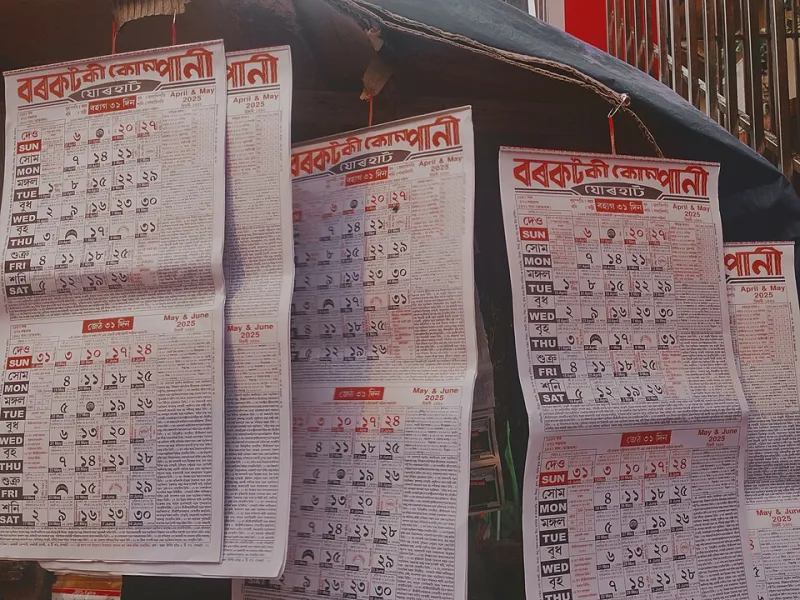
Photo: পাপৰি বৰা, CC BY-SA 4.0, via Wikimedia Commons
There is a particular kind of quiet that shows up in a house when nobody has to be anywhere. The dog settles. Someone wanders into the kitchen and opens the fridge for no real reason. A kid starts building something with no clear plan. For about five minutes, everyone looks slightly confused, like the Wi-Fi went down. Then the shoulders come down. That quiet is not a sign that your family is falling behind. It is a sign that your family has room to breathe.
When busy becomes the default setting
Activity creep rarely announces itself. It looks like one soccer season that turns into travel team, one after-school club that becomes two, one birthday party that becomes a three-weekend circuit. You say yes to each thing on its own merits because it seems reasonable in the moment. Then you look up in November and realize that Tuesday through Thursday are spoken for, Saturday is split between two towns, and Sunday is the only day left for grocery runs, laundry, and the vague sense that you meant to do something together.
A few signs that the calendar has quietly taken over:
- Your child asks what is next before the current thing is over, every single time.
- Most meals in the car feel less like a choice and more like logistics.
- You cannot remember the last time your family had an afternoon with no destination.
- Declining an invitation feels like a personal insult rather than a simple scheduling decision.
- Your kid melts down after activities that are supposed to be fun, not because anything went wrong, but because there was no landing pad afterward.
None of this means you are overparenting or underparenting. It means the family schedule has more inputs than it has space. That is a logistics problem, not a character flaw.
What an open afternoon actually buys you
Unscheduled time is not a luxury for families with nothing to do. It is part of how kids practice emotional regulation. Transitions take energy. Transitions followed by snacks in the car, homework at the table, and bedtime before anyone has actually exhaled take more. An empty afternoon gives everyone a chance to reset without being managed through it.
It also gives you something that cannot be scheduled: spontaneous connection. The living-room floor wrestling match. The random walk to the corner. The ten-minute conversation in the driveway about nothing that turns into the conversation about something. Those moments do not show up on a calendar, but they need calendar space to exist.
And for caregivers, an open afternoon is a buffer against the low-grade resentment that builds when every free hour is already promised to someone else. You are not just protecting your kid's rest. You are protecting your own ability to be warm at 6 p.m.
The script for saying no without a courtroom defense
The hardest part of protecting time is often the social moment of declining. Many of us over-explain because we feel guilty. We offer a paragraph when a sentence would do. Try something shorter and warmer:
- "That sounds like a great opportunity. We are not adding anything to our schedule this season."
- "We are protecting our Sunday afternoons right now, so we will have to pass."
- "Thanks for thinking of us. We cannot make that work, but I hope it goes well."
- "We are keeping weeknights quiet for a while, so I will say no for now."
- "That is more than our family can take on at the moment. Please keep us in mind next time."
You do not need to prove that your reason is good enough. "We are not scheduling extras right now" is a complete sentence. If someone pushes back, you can repeat it once in a friendly tone and then change the subject. Warm boundaries are not rude. They are how you keep from becoming resentful later.
Build a nothing afternoon you can repeat
Pick one block of time and make it boring on purpose. A three-hour window on a weekend works well for many families, but it can be a weekday evening or a Sunday morning if that fits your life better. The key is that it is recurring and predictable. Predictability is what turns empty time from a weird gap into a ritual.
Tell your kids what it is. "Sunday after lunch is our open afternoon. We are not signing up for anything during that window." Put it on the family calendar if you use one. Give it a name if that helps: Open Afternoon, Blank Saturday, Quiet Sunday. The name does not need to be cute. It needs to be clear.
Keep the default options simple. A few books, a deck of cards, sidewalk chalk, a puzzle, a bike, a blanket on the floor. You are not trying to create a Pinterest-worthy enrichment program. You are trying to make rest easy to choose. Some kids will need a little scaffolding at first because they are used to being entertained. That is normal. A short list on the fridge can help: read, build, draw, go outside, rest, help with a small task, or find something to do quietly.
Protect it from the usual invaders
The open afternoon will be tested. A friend invites your child to a movie. A relative wants to stop by. You remember the Target run you have been putting off. None of these things are emergencies. They are choices. You can still choose the blank square.
One useful rule is this: the open afternoon is not available for errands. Errands expand to fill whatever space they are given. If you have to run out, do it before or after the protected block. Another rule: do not turn the open afternoon into a catch-up session for schoolwork or chores. Those things matter, but if the only unscheduled time always becomes productivity time, your kids will learn that rest is not actually allowed.
Screens are not the enemy here. A family that has been going nonstop may need a low-demand afternoon that includes a movie and a nap. The point is not to enforce perfect emptiness. The point is to stop treating every open hour as a resource to be optimized.
The point is not perfect emptiness
An open afternoon will not always look peaceful. Someone will be bored. Someone will complain. Someone will ask to invite a friend over, and you will have to decide whether that fits the spirit of the block or just fills it back up. That is okay. The goal is not a perfectly silent house. The goal is a family rhythm that includes room for rest, repair, and the kind of connection that only happens when nobody is checking the clock.
You are allowed to leave a square blank. In a family calendar full of good things, that blank square may be one of the most important things you protect.